.jpg)

When market cash flow slows down, marketing budgets are almost always the first line item to face the chopping block. For CMOs and business owners, the challenge is no longer about spending more to capture market share at all costs. The real question has shifted: how do you ensure every dollar spent drives direct business results?
In a cost-cutting environment, an outdated budget allocation mindset can drain your resources before a single meaningful conversion occurs. What businesses need today is a flexible, data-driven, performance-first multi-channel marketing budget map.
1. Rethinking your budget: From Growth at All Costs to Performance-Led Growth
One of the most common mistakes businesses make under economic pressure is cutting marketing budgets uniformly across all channels by a flat percentage. This mechanical approach often causes serious damage: it cripples the channels generating core revenue and disrupts the customer experience journey entirely.
To protect cash flow without sacrificing business outcomes, companies must shift from Historical Budgeting (allocating based on last year's spend) to Zero-Based Budgeting. Under this model, every channel and every campaign must justify its place by proving its ability to generate real profit in the current environment, rather than receiving funding by default based on outdated figures.
Performance marketing during a budget squeeze is not about stopping spend. It is about restructuring your investment portfolio to protect profit margins.
2. The Multi-Channel budget framework: The enhanced 70-20-10 model
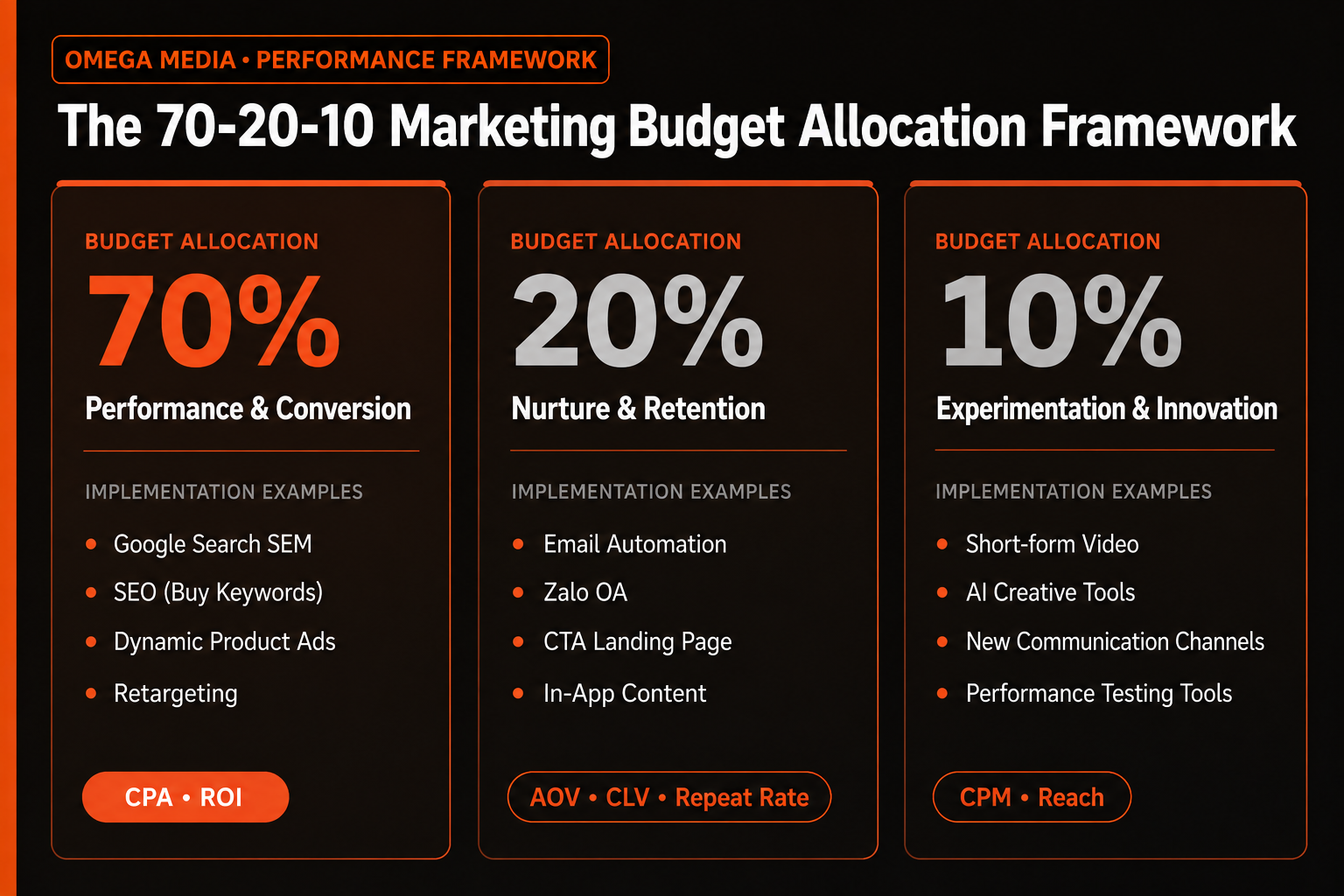
To maintain the right balance between short-term revenue goals and long-term brand health, marketing dollars must be allocated across three clearly defined strategic buckets.
- 70% core performance budget
This is the untouchable allocation, directed entirely toward channels that are measurable, accountable, and capable of generating immediate cash flow.
Priority channels: Intentional paid search (Google Search SEM), purchase-intent SEO targeting transactional keywords, dynamic product advertising on e-commerce platforms, and retargeting campaigns aimed at cart abandoners.
Core objective: Maximize Return on Ad Spend (ROAS) and reduce the Cost Per Acquisition (CPA) of new customers.
- 20% retention and mid-funnel budget
Acquiring a new customer costs significantly more than retaining an existing one. This 20% allocation protects existing revenue streams and nurtures warm prospects in the middle stages of the funnel.
Priority channels: Email marketing automation, Zalo OA care sequences, in-app personalization, and Conversion Rate Optimization (CRO) efforts on key landing pages.
Core objective: Increase repeat purchase frequency, raise Average Order Value (AOV), and extend Customer Lifetime Value (CLV).
- 10% innovation and testing budget
Cutting all experimentation entirely will leave your business unable to adapt when the market recovers. This 10% reserve is a safety margin for discovering new growth opportunities at low cost.
Priority channels: Short-form video content in emerging formats, AI-powered creative production automation, and pilot tests on rising niche advertising platforms.
Core objective: Identify high-performing touchpoints with competitive CPMs before competitors do.
3. Three Non-Negotiable principles for running your budget map
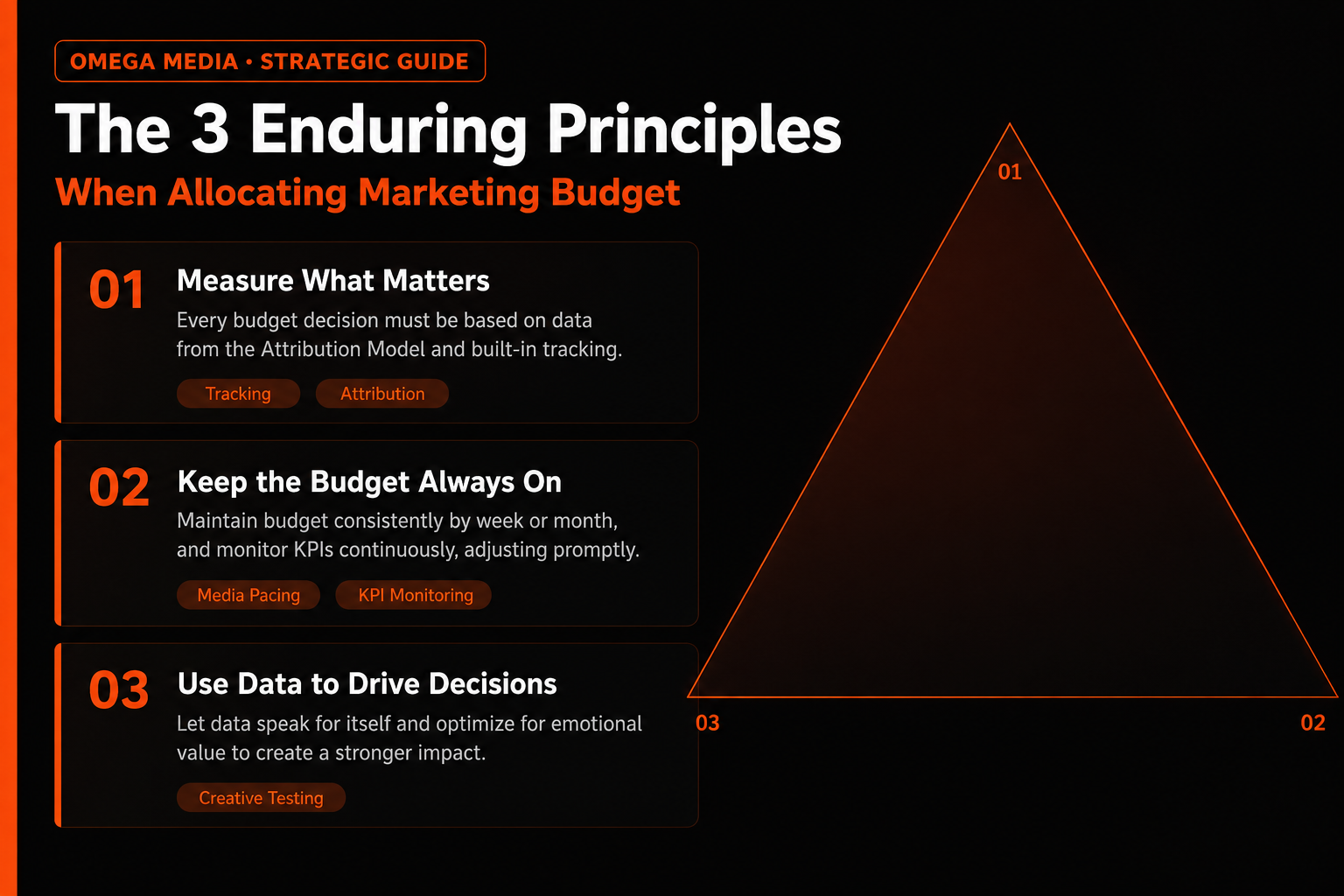
For the budget allocation framework to function effectively and stay on course, three operational principles must be applied without exception.
- Make your measurement infrastructure transparent. Every budget reallocation decision must be grounded in real-time data. If your tracking setup is broken or your Attribution Model cannot clearly define each channel's role in the conversion path, you are essentially burning budget in the dark.
- Keep budget flow dynamic. Your budget map is not a rigid quarterly or annual plan. Allocations should shift on a weekly or monthly basis: channels that outperform their KPIs earn additional investment, while those showing declining ROAS must be pulled back immediately.
- Sharpen your messaging to match rational buying behavior. In a tightening economy, consumers become more rational and deliberate. Aspirational, lifestyle-driven advertising copy must give way to direct, value-focused messaging that addresses specific pain points and offers zero-risk commitments for customers.
 4. Case Study: 25% revenue growth while cutting total budget by 30%
A retail brand within the Omega Media partner network faced a significant challenge at the onset of a market downturn. The board demanded a 30% reduction in total marketing spend while keeping revenue targets intact.
Omega Media's implementation strategy:
- Phase 1 (Audit): All broad display campaigns that failed to drive quality traffic were eliminated entirely. Sponsorship and event investments with poor ROI were cut.
- Phase 2 (Restructure): 75% of the remaining budget was concentrated into the search advertising ecosystem alongside behavioral dynamic product ad sequences. The remaining 25% was deployed to build automated remarketing funnels via messaging and email to reactivate customers who had not transacted in six months.
- Phase 3 (Creative Optimization): All ad creative was overhauled, shifting from lifestyle imagery to messaging centered on product durability, cost savings, and operational fee-free policies.
Results after one quarter:
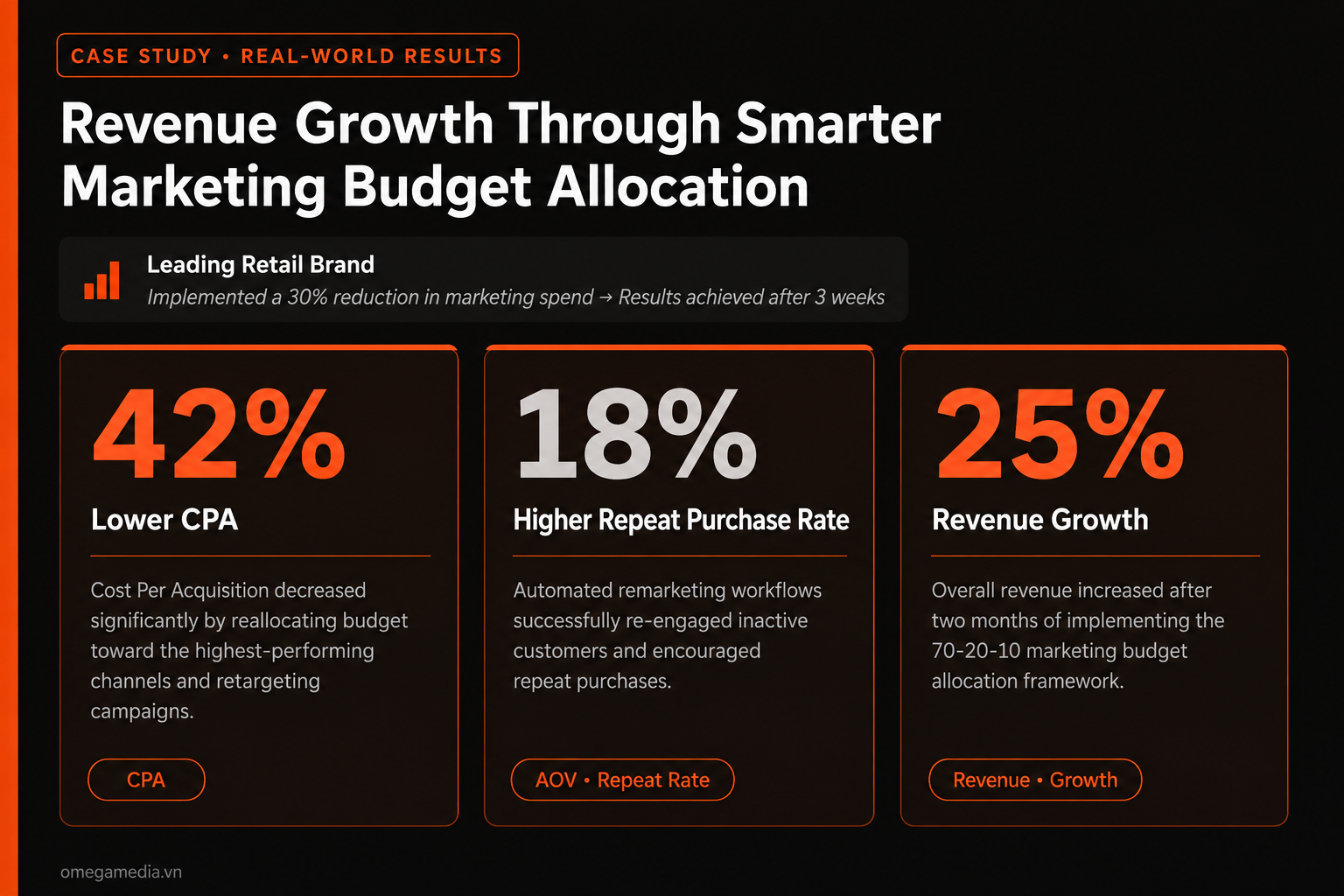 The brand's Cost Per Acquisition dropped by 42%. Automated nurture sequences drove an 18% increase in repeat purchase rates. Overall, the company not only preserved its revenue target but achieved 25% revenue growth while successfully reducing spend by the required 30%
Conclusion:
A tightening economic environment is a harsh but effective filter. It rewards businesses that are data-driven and strategically sharp while exposing those that rely on inertia. The winner in this environment is not the company with the largest budget. It is the company that deploys its budget most intelligently.
Is your business ready to restructure its multi-channel marketing cash flow and eliminate the budget blind spots that are draining your resources?
Explore a strategy consultation with an Omega Media expert and receive a comprehensive performance audit of your media channel ecosystem along with a custom budget allocation map built for your business model.


![[29/09/2025] Global Digital Trade Expo 2025](/storage/media/2026/05/omegamedia-hoi-cho-thuong-mai-dien-tu-toan-cau-gdte-2025-11.jpg)